
Dock Pylon Corrosion Defense & Preservation
IGNORE YOUR PYLONS AND THEY WILL GO AWAY!
ACT NOW!
WHILE THE WATER IS LOW!
Whatever you call it,
we’ve got you covered.
Whether it’s basic scaling maintenance or comprehensive remediation, Pylon Docktors delivers advanced marine epoxy encapsulation coating designed to protect, preserve, and prolong your foundational footprint by arresting material decay at the waterline.
Is Your Pylon Steel Running on “Borrowed Time”?
Are you banking on the myth that factory steel lasts forever? That mistake is putting your massive waterfront investment at risk.
Why DIY Painting or Spray-Coating Lake Dock Piles Always Fail
It can be tempting to buy consumer-grade rust paints or spray coatings for a quick weekend fix, but applying standard paint to lake steel pylons underwater or at the waterline often leads to rapid blistering, cracking, and ongoing corrosion. Here is why DIY surface painting fails to protect lake dock piles:
- ✘ Film Thickness (2 Mils vs. 15+ Mils): Standard spray paint dries to a fragile thickness of only ~2 mils (0.002 inches), which easily wears through from water movement and debris. Commercial marine epoxy encapsulation builds a dense barrier of 15+ mils (0.015 inches)—creating a thick, impervious shield against moisture.
- ✘ Sun Heating & Water Cooling Thermal Cycles: Steel dock piles undergo extreme daily temperature shifts—heating up significantly under direct sunlight during the day and rapidly cooling down at night from contact with lake water. Rigid, thin paints cannot flex with this constant metal expansion and contraction, causing micro-cracks that draw lake water straight to raw steel.
- ✘ Trapped Moisture & Bio-Films: Lake water, organic algae, and bio-films sit against steel surfaces. Painting over un-prepped steel seals moisture directly under the paint film, allowing rust to continue bleeding through out of sight.
- ✘ Inadequate Surface Preparation: Submerged and splash-zone marine coatings require heavy mechanical scaling to reach raw steel. Hand-sanding or wire-brushing lake piles leaves deep pitting filled with active rust that forces paint to flake and peel within months.
Stop wasting time painting over active rust. Schedule a professional marine pylon inspection to protect your dock steel properly.
Believe the Science
Don’t take our word for it. Go put the world’s most powerful AI models to the test.
Your Dock Has Spent Decades in the Trenches.
Is It Sitting in the Critical Failure Zone?
Your steel has spent decades fighting localized electrochemical corrosion driven by oxygen and lake waves. If your flange edges are thinning out, you are experiencing advanced material degradation in the critical splash zone. We halt the oxidation process, mechanically scale the steel to bare metal, lock out future oxygen with marine-grade barrier coatings, and install sacrificial anodes to stop future decay in its tracks.
Here is exactly how we arrest the decay and fortify your material profile protection:
Catch the Rot
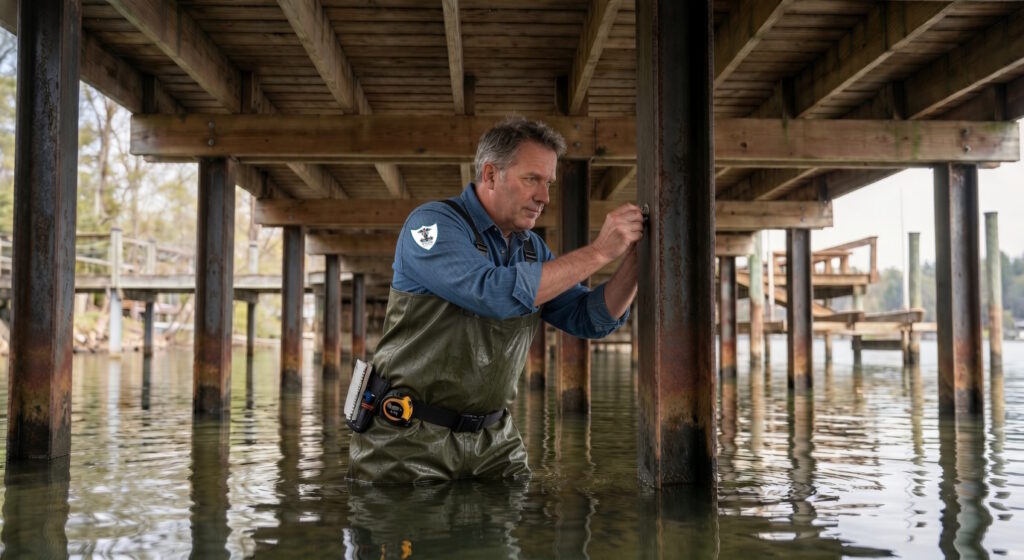
We deploy precise physical thickness testing to map out exactly where the electrochemical cell has caused deep section loss and “necking.”
Scale to Bare Metal
Our team mechanically scales the compromised surfaces down to clean, bright base metal, stripping away decades of highly destructive, thick flaking rust.
Lock Out the Future
We apply heavy-duty marine-grade barrier epoxy coatings to completely isolate the steel from surface oxygen, then optional UV protective marine paint.
Thirty years of water and wake won’t fix itself.
Before heavy summer boat traffic puts your structure to the ultimate test, let us verify what’s left of your steel thickness.
Your Dock is Brand New.
The Destruction Starts Today.
Most property owners think a new steel dock is safe for a decade. Environmental reality says otherwise. In heavy boat-wake environments, unprotected raw steel begins degrading the moment it hits the water.
Here is the brutal timeline your new investment is facing:
Day 1: The Trap is Set
Churning waves constantly inject high levels of oxygen directly at your exact waterline.
Month 12: The Invisible Attack
This oxygen triggers Differential Aeration Corrosion—a localized chemical cell that quietly eats into your pristine steel columns from the inside out.
Year 5: “Necking” Begins
You will see aggressive, permanent thinning of the steel right at the splash zone. Once the metal loses its thickness here, the protective profile is highly prone to rapid, severe degradation.
The Best Time for Preventive Maintenance is Before the Damage Starts
Installing targeted protection and marine-grade epoxy barriers right now locks in your dock’s metal profile and shields your investment against future decay.
Spend a little on preventive preservation today…
Write a massive check for a complete dock replacement later.
It’s not a matter of if the science applies to your dock—it’s when.
What’s Included With Your Evaluation
Know Exactly What’s
Holding Your Dock Up.
Most dock owners have no idea what’s happening to their steel pylons below the waterline — until something fails. Pylon Docktors gives you the hard data, not a guess.
Pylon-by-Pylon Measurements
Every pylon measured and documented with actual metal thickness readings and percentage of material loss.
Photo Documentation
Real field photos of each pylon showing exactly what we found — nothing is left to interpretation.
Critical Findings & High-Corrosion Zones
We flag the pylons that need immediate attention with clear explanations of why — and what happens if left unaddressed.
Risk Assessment & Recommendations
A prioritized action plan — fix now, watch, or wait — so you can make smart, informed decisions about your waterfront investment.
This isn’t a general once-over. We use thickness gauges to measure the actual remaining steel in the splash zone of every pylon — the exact zone where corrosion is most aggressive and most often invisible to the eye. You’ll know the condition of your dock down to thousandths of an inch.
👀 Why Do Lake Pylons Look So Bad Right Now?
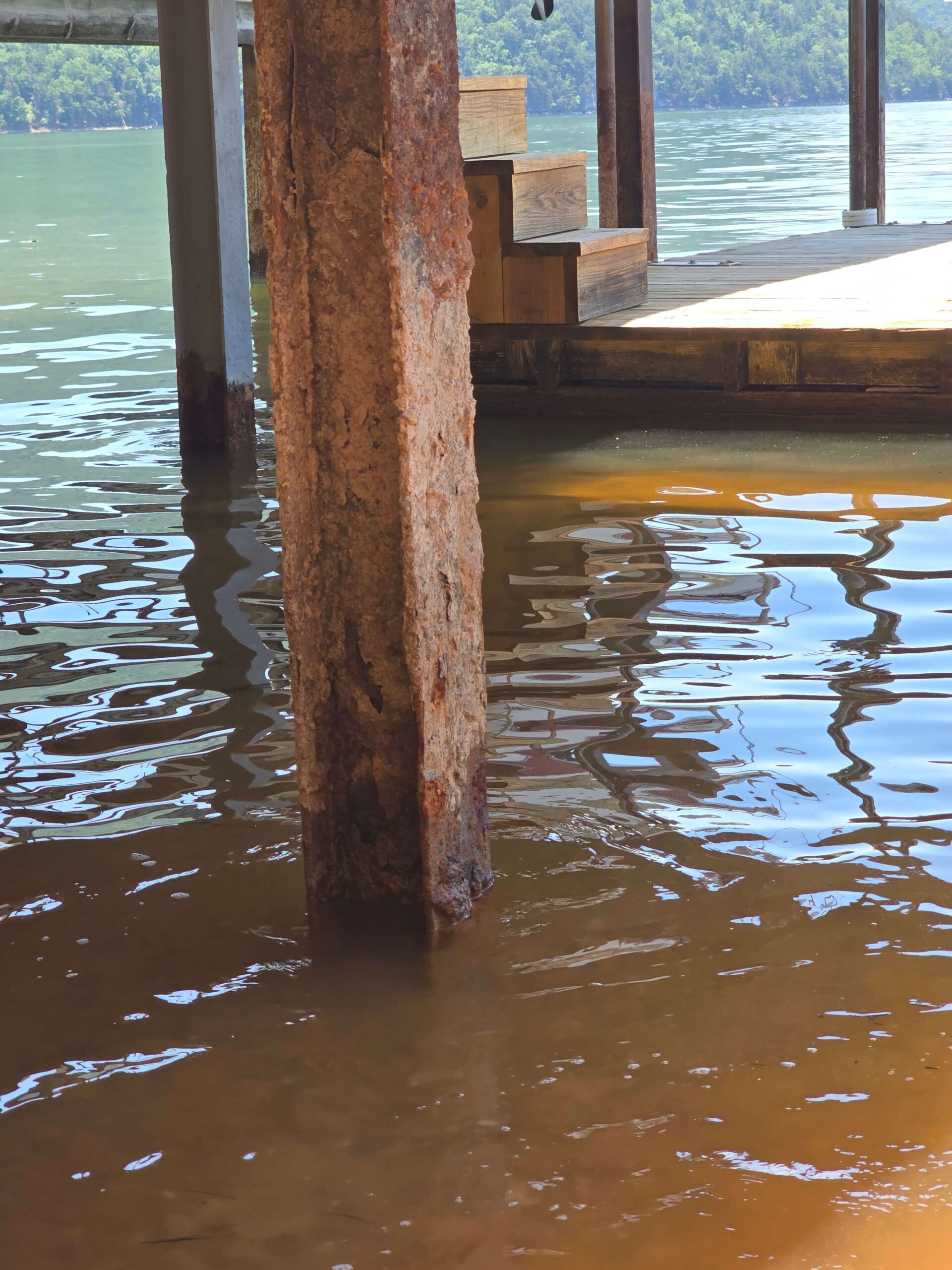
When water levels are low, it pulls back the curtain on your dock’s waterline profile. The severe corrosion scaling and advanced material thinning you are seeing on your pylons right now isn’t new—it has been eating away unchecked underwater for decades. The low water level has simply exposed the critical environmental degradation that is normally completely hidden beneath the surface. Take advantage of the low water line to isolate and seal your steel assets before the lake levels rise again.
Visualizing “Necking”
Before
After
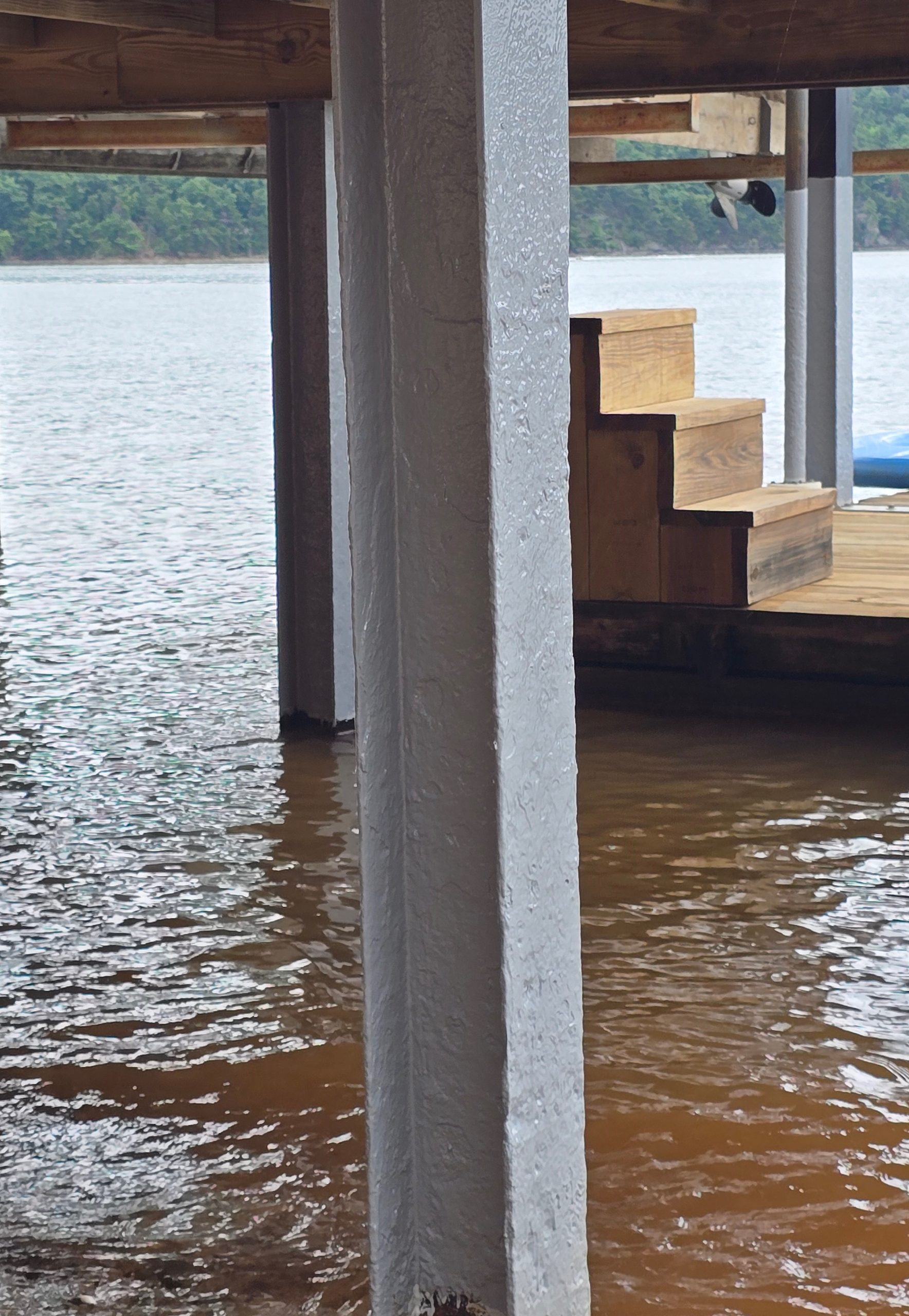
Whether your steel is brand new or decades old, raw metal pylons face a constant threat. Steel doesn’t rust evenly. Over time, the unique environmental conditions of a busy lake create a highly concentrated zone of material degradation precisely at your waterline.
CONTACT US FOR AN EVALUATION
973-986-0567
sales@PylonDocktors.com